
Key Takeaways:
- Advanced Accuracy Through Modern Technology: Today’s golf simulators use high-speed cameras, infrared sensors, and radar systems to track ball flight with precision, creating a realistic and dependable indoor experience.
- Key Factors That Influence Accuracy: Launch monitor quality, software performance, room setup, and regular calibration work together to deliver feedback that closely mirrors on-course performance.
- Meaningful Feedback For All Skill Levels: Metrics such as launch angle, spin, and smash factor help golfers understand their swing, practice efficiently, and improve in a controlled and consistent environment.
At Golf Simulator Depot, we take pride in delivering systems that bring actual performance, innovative design, and lasting value into your home. Our collection features trusted launch monitors, durable enclosures, and accessories chosen for reliability. Every product reflects our commitment to quality and the belief that indoor golf should feel natural, accessible, and consistently rewarding for golfers at every level.
Many golfers wonder how accurate are golf simulators when comparing indoor practice to outdoor play. Modern systems measure ball speed, launch angle, spin, and club movement with a level of consistency that even experienced players find surprising. Today’s software and sensor technology create dependable feedback that helps refine technique and build confidence. This overview introduces what indoor accuracy truly looks like and what you can expect from a well-prepared home setup.
In this blog, we will explore how modern golf simulators achieve their accuracy, the factors that influence performance at home, and what golfers can realistically expect from a well-designed indoor setup.
Factors That Influence Accuracy In A Home Golf Simulator
Accurate performance data depends on more than choosing the right simulator. Many golfers who wonder how accurate are golf simulators for distance quickly discover that results depend on launch monitor quality, room setup, and overall calibration. Reviewing factors such as lighting and ceiling height for golf simulator helps ensure consistent readings throughout indoor sessions.
Quality Of The Launch Monitor
The launch monitor is the primary driver of accuracy, capturing essential metrics such as ball speed, launch angle, spin rate, and club path. Systems utilizing radar or photometric technology provide reliable data that helps golfers understand their swing patterns. Even mid-range models now provide readings close to outdoor conditions, making them suitable for consistent training at home.
Simulator Software And Course Simulation
Software determines how raw data translates into realistic on-screen play. Leading programs feature detailed course mapping, accurate ball physics, and responsive visuals that mirror real layouts. Regular updates maintain consistency in distances, terrain behavior, and shot outcomes, ensuring the experience remains dependable for practice or complete rounds.
Space And Environment Optimization
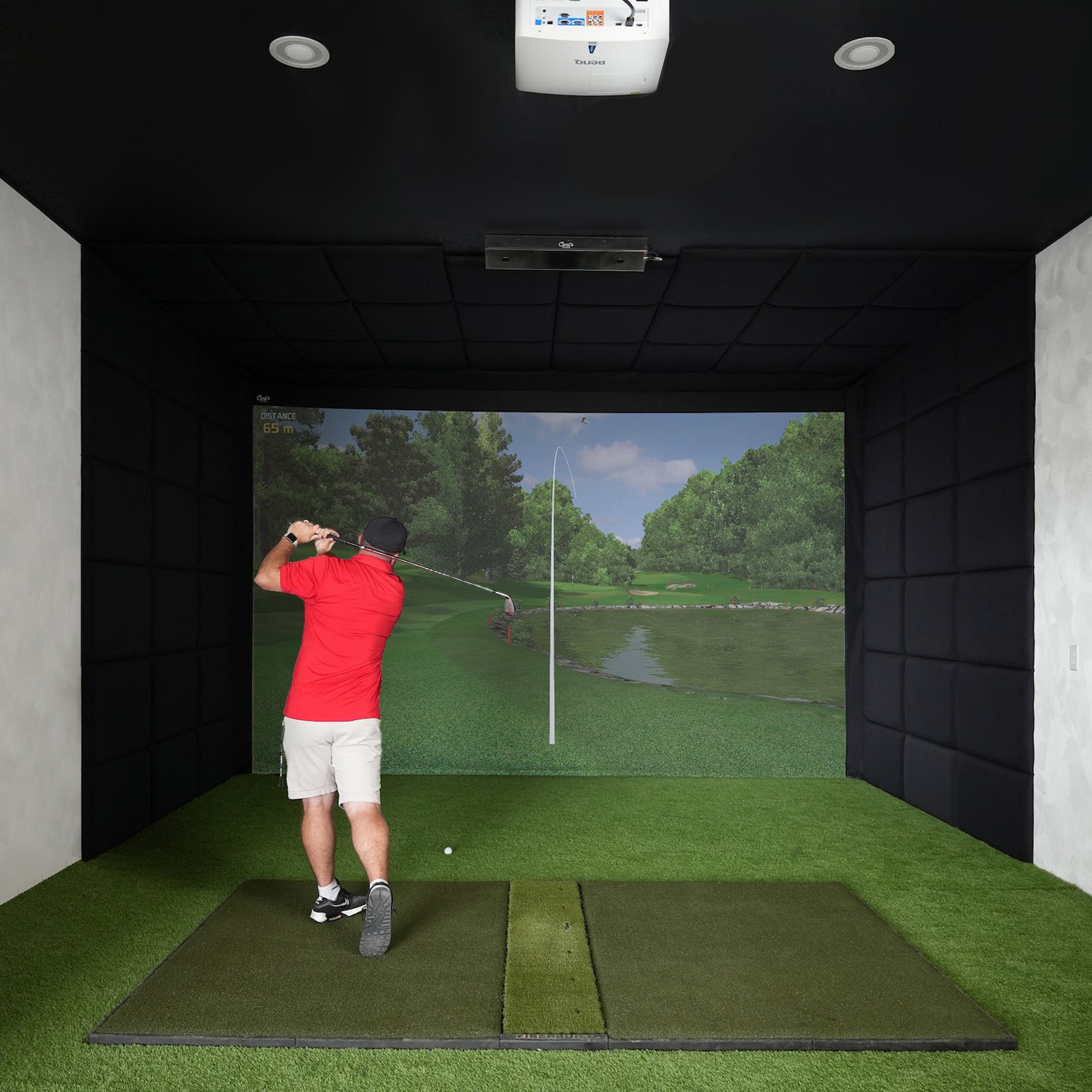
Your room setup directly affects how sensors track each shot. Adequate ceiling height, clear swing paths, and balanced lighting help launch monitors read ball movement without interference. Reducing reflective surfaces and maintaining a flat hitting area supports consistency, allowing the simulator to register accurate data across different sessions.
Calibration And Routine Maintenance
Proper calibration ensures the system operates at its optimal performance. Launch monitors must be aligned with the target line and positioned according to manufacturer guidelines. Routine cleaning of lenses or sensors, along with occasional diagnostic checks, helps prevent accuracy issues and ensures consistent feedback during repeated use.
Quality Of Mats, Balls, And Clubs
Premium hitting mats provide realistic turf interaction, allowing sensors to capture impact data accurately. Using regulation balls and your personal clubs ensures readings match your actual swing characteristics. Quality accessories help create a smooth transition between indoor practice and outdoor play.

The Role Of Software Algorithms In Shot Mapping
Understanding how simulator software interprets your swing helps explain why modern systems feel so accurate. These algorithms connect raw launch monitor data to realistic ball behavior that mirrors on-course performance.
- Turning Raw Data Into Actionable Insight: Software algorithms interpret ball speed, launch angle, spin, club path, and face angle, converting complex measurements into a digital shot that accurately reflects your swing mechanics.
- Predicting Ball Flight With Real-World References: Algorithms compare your impact data to large databases of real swings, utilizing physics models to predict trajectory, curvature, distance, and roll as they would occur outdoors.
- Accounting For Environmental Variables: Advanced programs factor in wind, elevation, turf conditions, and surface interaction to ensure indoor shots behave realistically, supporting dependable practice across various scenarios.
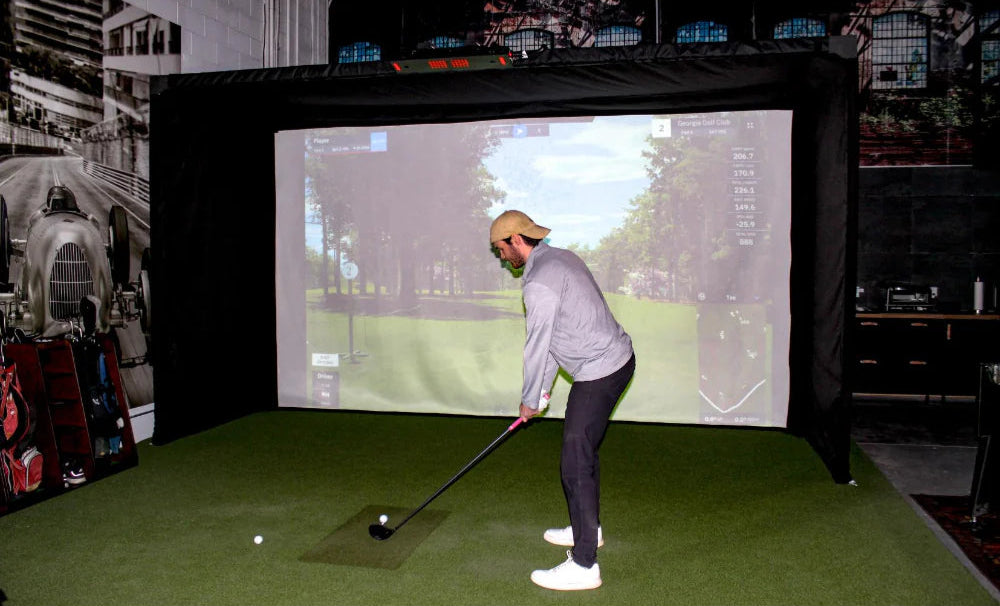
- Producing Accurate Real-Time Shot Mapping: High-speed calculations display ball flight instantly in 3D, allowing golfers to see shot shape, spin effects, and roll-out with clarity that supports meaningful improvement.
- Evolving Through Continuous Software Updates: Algorithm updates refine ball flight physics and enhance responsiveness over time, improving shot accuracy and realism as systems learn from new data and user feedback.
These processes make simulator feedback trustworthy, answering a common question among home users: Are golf simulators accurate when compared to real-world play? The precision of these algorithms, especially when paired with detailed mapping tools and realistic course physics, helps golfers build confidence whether practicing indoors or exploring different ways to golf at home.
Radar vs Photometric Sensors: Pros & Cons For Reliability
Sensor technology drives the accuracy of every golf simulator, making it essential to understand how radar and photometric systems operate. Radar excels in large setups and provides excellent long-flight tracking, but room setup and equipment budget also affect choices. Many golfers compare sensor styles when reviewing overall golf simulator cost to determine which system best fits their performance expectations and long-term plans.
How Radar Technology Tracks Full Ball Flight
Radar-based systems utilize Doppler radar waves to track the ball as it is launched and travels. This allows them to measure ball speed, spin, trajectory, and carry distance with strong accuracy, especially on full swings. Because radar reads the ball in motion over a longer distance, it performs best in larger simulator spaces or open garage-style setups where the ball has room to travel naturally.
Space Requirements That Influence Radar Accuracy
Radar accuracy can drop in compact areas where the ball does not travel far enough for complete tracking. Low ceilings, nearby walls, or objects in the room may interfere with readings. Radar systems may also struggle with low-speed shots, making chips and putts slightly less consistent for players who focus heavily on short-game precision.
How Photometric Sensors Capture Impact Zone Data
Photometric systems use high-speed cameras to record the moment of impact, capturing ball speed, launch angle, spin, and clubface details with only a few feet of travel. This makes them ideal for smaller indoor simulator rooms, where space is limited. Because they gather data immediately at impact, they remain consistent even when the environment around the net changes.
Environmental Consistency That Supports Photometric Accuracy
Camera-based sensors are less affected by lighting variations or background clutter outside the target area. Their long-flight calculations rely on sophisticated algorithms, but for chips, putts, and controlled shots, they offer strong accuracy and repeatability in tight spaces.
Choosing The Right Sensor For Your Space And Style
Both radar and photometric sensors offer dependable performance when used in the right environment. Radar excels in open areas with full ball flight, while photometric systems excel in smaller rooms, focusing on detailed shot analysis.

Calibrating For Tour Level Consistency And Accurate Multiplayer Swing Tracking
Calibration is essential for getting reliable performance from your diy golf simulator. When hardware and software are correctly aligned, your system provides precise, repeatable feedback that supports genuine improvement and enjoyable multiplayer sessions.
Setting Up Launch Monitors For Consistent Feedback
Accurate tracking starts with placing the launch monitor exactly as instructed. Entering the correct club details and loft settings helps sensors read your swing properly, ensuring ball speed, launch angle, and spin numbers match real on-course results.
Optimizing Lighting And Placement For Reliable Tracking
A well-lit, glare-free hitting zone allows cameras and sensors to capture clean data. Positioning the launch monitor at the correct distance and using a stable hitting mat helps maintain consistent readings across full swings and short shots.
Performing Routine Calibration And Data Checks
Regular calibration keeps the simulator tuned. Using test shots to verify expected carry distances allows the system to make minor corrections. If numbers drift, revisit club profiles or sensor alignment to quickly restore accuracy.
Using Player Profiles For Personalized Improvement
Saving swing profiles or past data helps the simulator adapt to your tendencies. As your technique evolves, algorithms adjust how shot information is interpreted, providing you with feedback that remains useful throughout long-term practice.
Maintaining Accuracy During Multiplayer Rounds
Modern simulators adjust automatically as players rotate, reading each golfer’s stance, club selection, and swing style. This ensures accurate tracking for beginners, left-handed players, juniors, and low-handicap golfers, eliminating the need for manual recalibration between turns.
Supporting Group Play With Consistent Shot Replication
Reliable ball physics and real-time mapping allow each player’s shot shape and distance to appear naturally on-screen. Automatic scoring and quick updates ensure that multiplayer rounds remain smooth, competitive, and enjoyable for friends and family.
Comparing Indoor Readings To On-Course Results
Understanding how indoor data compares to outdoor performance helps golfers trust their simulator numbers and use them effectively for practice, improvement, and enjoyable gameplay.
- How Modern Sensors Capture Real Swing Data: High-speed cameras, radar, and infrared sensors instantly record ball speed, launch angle, spin, face angle, and club path, creating swing analytics that closely mirror real-world outdoor performance.
- How Ball Flight Algorithms Recreate On-Course Shots: Simulators translate swing data through refined physics models, generating realistic trajectories, curvature, carry distances, and roll that align well with shots hit on real fairways.
- Why Indoor Yardages Often Match Outdoor Results: Drivers, fairway woods, and wedges typically produce similar numbers indoors because premium launch monitors accurately track impact conditions, giving golfers dependable confidence in their shot patterns.
- Where Indoor Golf Differs From Outdoor Play: Variables such as wind, rough terrain, uneven lies, and course firmness cannot be perfectly duplicated indoors, so outdoor conditions still influence real-world yardages more than simulator settings.
- How Simulators Support Consistency & Skill Building: Indoor environments eliminate weather disruptions and turf inconsistencies, allowing golfers to focus on technique, analyze feedback, and build repeatable mechanics that translate effectively to outdoor rounds.
- Why Beginners & Skilled Players Benefit Equally: Immediate shot feedback helps both new and experienced golfers understand fundamentals. In contrast, professional players can refine their shot shapes and distance control using data that mirrors their on-course tendencies.
- How Indoor Golf Enhances Group Play & Practice: Multiplayer features and consistent playing conditions support friendly competition and predictable yardages, making practice enjoyable and measurable for families and friends.
Simulators may not perfectly replicate every outdoor variable, but their accuracy is sufficient to guide meaningful improvement and deliver a reliable, engaging golf experience year-round.

Final Thoughts
Accuracy is at the heart of today’s indoor golf experiences, and at Golf Simulator Depot, we’re proud to help make that level of precision part of your daily routine. Advances in launch monitor technology, graphics engines, and swing analysis have transformed home simulators from a fun novelty into an essential tool for both seasoned golfers and curious newcomers. Whether you’re looking to shave a few strokes off your game, experience iconic courses, or simply unwind with family and friends, you can trust that our simulators translate your skills and provide meaningful, exact feedback.
Everyone deserves easy, reliable access to quality golf practice, no matter what the weather or your schedule throws your way. With Golf Simulator Depot’s solutions, you’re not only replicating the feel and challenge of real courses but also bolstering your confidence through data-driven improvement and endless on-demand play. It’s how much fun and progress you can unlock in your own space? For us, the answer is clear: Bring the game home, and discover accuracy and joy in every swing.
Frequently Asked Questions About How Accurate Are Golf Simulators
What technology do modern golf simulators use?
Modern simulators utilize high-speed cameras, infrared sensors, radar, and photometric systems to track swing motion and ball flight, providing golfers with reliable data and a realistic indoor playing experience.
How accurate are indoor golf simulators compared to real golf courses?
Most quality simulators deliver data within a 2–5 percent margin of real-course performance, providing dependable feedback that translates smoothly into outdoor play for both practice and improvement.
Can golf simulators measure spin rate and ball speed?
Yes, modern systems measure spin rate and ball speed with substantial precision, giving golfers essential information needed to improve consistency, distance control, and overall shot performance.
Do golf simulators track club face angle and path?
Advanced simulators track club face angle and swing path, enabling golfers to understand shot shape, identify swing issues, and develop more consistent mechanics during home practice.
Are simulated courses based on real-world golf courses?
Many simulators feature detailed virtual recreations of well-known courses, allowing golfers to experience famous layouts at home with accurate visuals and realistic course elements.
What is the margin of error in golf simulator shot data?
High-quality simulators typically maintain a margin of error of less than five percent, providing dependable measurements that closely match outdoor results when paired with a proper indoor setup.

