
Key Takeaways:
- Key Factors Influencing Golf Simulator Costs: Golf simulator costs are influenced by core technology, display systems, hitting surfaces, software features, and installation requirements.
- Reasons For Price Variations Between Simulators: Price variations among golf simulators are primarily due to differences in technology, setup features, and installation complexities.
- Flexible Installation Options For Every Space: Golf simulators offer flexible installation options in basements, garages, spare rooms, living rooms, and business venues, allowing golfers to play year-round.
At Golf Simulator Depot, we make the game you love accessible anytime, anywhere. Our focus is on delivering reliable, high-quality simulator setups tailored to real golfers and real spaces. From compact home systems to professional-grade installations, every product reflects our passion for precision, performance, and play. We’re here to help golfers practice, compete, and enjoy the sport year-round, on their terms.
Understanding the cost of a golf simulator goes beyond price tags; it’s about finding the right fit for your game, goals, and space. From entry-level setups ideal for casual players to advanced systems tailored for seasoned golfers, each option offers a distinct balance of performance, realism, and value. Discover how thoughtful investment decisions can transform any room into a personalized space designed for lasting enjoyment.
In this blog, we will explore what truly influences golf simulator cost, how to choose the best setup for your budget, and innovative ways to make home golf both affordable and rewarding.
What Factors Determine The Cost Of A Golf Simulator
Understanding what drives the home golf simulator cost helps you plan wisely and invest in a setup that fits both your space and skill level. From hardware to optional upgrades, each element contributes to the total golf simulator packages, shaping the experience you’ll enjoy at home.
Core Technology And Hardware Quality
The launch monitor or tracking system is the foundation of every simulator. Entry-level models utilize basic sensors for solid shot tracking, while mid- to high-end systems rely on advanced radar or high-speed cameras for precise data collection. More accuracy and features, like detailed spin and club metrics, raise the price but deliver a professional-level experience.
Display And Projection Experience
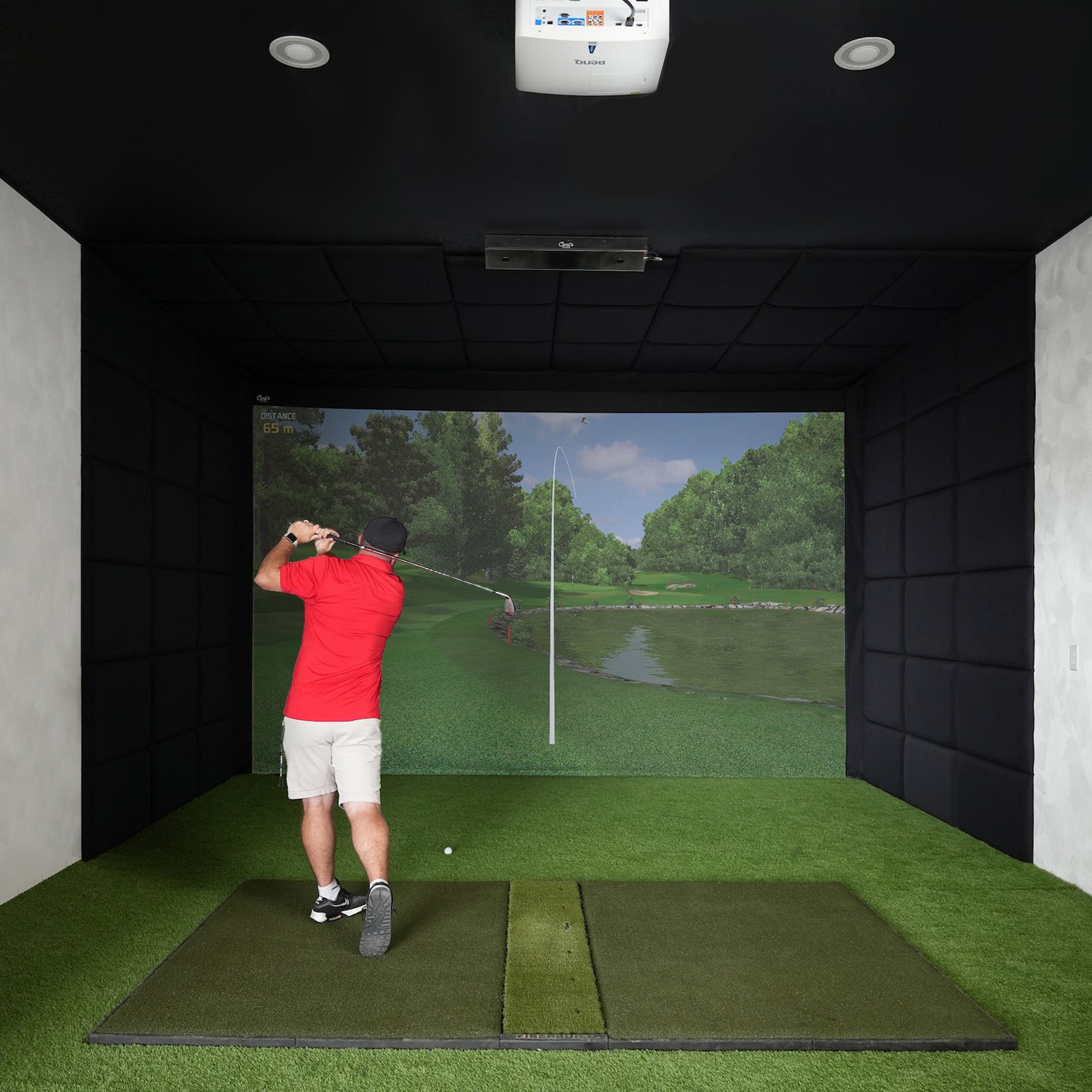
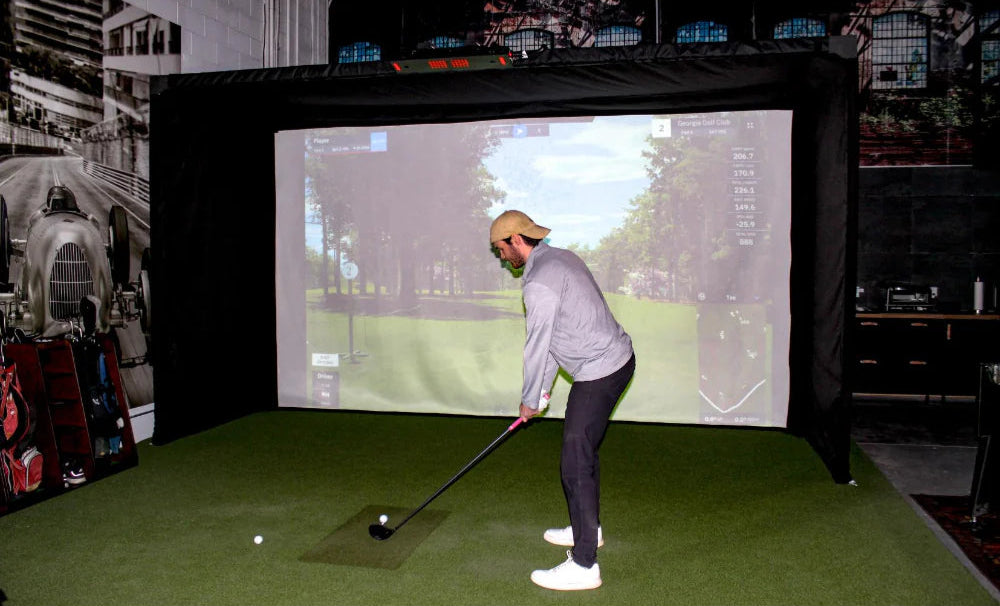
Your visual setup determines immersion and realism. A standard TV or monitor keeps things affordable, but a short-throw projector with a high-quality impact screen creates an authentic course-like feel. Higher-resolution projection enhances detail and brightness, enabling golfers to enjoy lifelike visuals in various lighting conditions.
Enclosure, Mats, And Hitting Surface Design
Durable hitting mats and safety enclosures shape both comfort and cost. Premium mats simulate real turf and absorb impact more effectively, while high-end enclosures provide added stability and protection. For long-term use, investing in quality materials pays off through a safer, more consistent swing experience.
Software Features And Course Variety
Simulator software influences both engagement and cost. Basic packages include driving ranges and limited feedback, while advanced platforms offer detailed analytics, multiplayer modes, and access to famous courses. The more realistic and interactive the gameplay, the higher the software cost, but also the greater the value for practice and entertainment.
Installation And Customization Costs
Your space setup can affect the final bill. Some systems work perfectly in garages or basements, while others require more preparation or professional installation. Accessories, such as lighting, club racks, and sound systems, can also enhance the setup, adding polish and comfort at a modest additional cost.

How Much Does A Golf Simulator Cost?
When deciding how much is a golf simulator costs, it’s essential to understand what you’re paying for at each tier. Entry-level options are affordable and mobile, while premium units provide full-course realism and in-depth analytics. Exploring the best golf simulator for home use ensures you find the right fit for your goals and budget.
Entry Tier: Mobile & Portable Options
Products like Rapsodo Mobile Launch Monitor (listed at $299.99) serve as lightweight, portable simulators. These are ideal for casual practice or for users who travel and want swing feedback on the go. They typically measure basic metrics (ball speed, carry distance) and rely on smartphone apps for simulation. Durability is modest, and they’re less suitable for full swing indoors due to limited data capture and less robust tracking.
Mid Tier: Consumer Launch Monitors
One step up is the Rapsodo MLM2PRO, priced at approximately $699.99, or the GolfJoy GDS Pro, which costs roughly $2,199.These units offer more advanced ball and club data, including spin rate, club path, and face angle. They often include simulation software and are built for regular indoor use. The build is sturdier, and they support complete swings in correctly set-up enclosures.
High Tier: Premium & Commercial Systems
At the top end are models like the Foresight GCQuad, priced at approximately $15,999, and the Foresight Falcon, priced at $14,999. These deliver complete multi-camera analysis, extreme accuracy, and full course simulation. They’re built for teaching studios, commercial use, or serious home setups. The hardware is rugged, with precision optics and advanced software licensing.
Hidden Costs & Add-ons
Even when core hardware is chosen, additional costs arise, including enclosures (nets, impact screens, and framing), hitting mats, modifications to a shed or room, projectors, software licenses, and installation services. For instance, a premium enclosure like Simulator Bay 8, priced at ~$1,596, adds durability, impact netting, and visual immersion. Bundling or wise component choices can help manage these extras without surprise overspending.
Ready to bring the course home? At Golf Simulator Depot, we make premium indoor golf setups affordable for every player. Compare options, customize your package, and enjoy flexible pricing that fits your goals and space. Start building your perfect setup today, because year-round golf should be within reach for every budget.
What’s Included In A Complete Golf Simulator Package?
Knowing what’s inside your setup helps you understand the overall golf simulator price and value. From launch monitors to projectors, each component affects accuracy, comfort, and longevity.
Launch Monitor + Tracking Unit
This is the heart of the system. Devices such as Rapsodo MLM2PRO, GolfJoy GDS Pro, Foresight GCQuad, or Foresight Falcon come with optical or radar sensors that measure ball flight and club data. They deliver vital metrics (ball speed, spin axis, face angle, club path) and feed the simulation software to render realistic shots.
Enclosure, Netting & Impact Screen
A rigid enclosure protects the surroundings and provides a clean visual surface. For example, Simulator Bay 8 features powder-coated aluminum framing, impact-resistant netting sewn into the frame, and a floating high-definition screen.The impact screen must resist repeated ball strikes while preserving image clarity. Side netting, valances, and protective edge barriers increase safety.
Hitting Mat & Strike Zone
A durable hitting mat simulates turf, providing stability for full swings. It must resist divots and wear under repeated use. Some premium packages include multi-layer surfaces that give feedback and enhance club interaction. The mat also buffers shock and protects both the flooring and clubs.
Projector & Display System
Projectors (short-throw or ultra-short-throw) project simulation visuals onto the impact screen. Brightness (lumens), resolution (HD/4K), throw distance, and lens shift capacity are key specs. The integration of the projector with the enclosure ensures proper alignment and reduces glare. Some premium kits may include mounting hardware, calibration tools, or lens covers.
Each component must harmonize; the accuracy of the launch monitor, the quality of the screen, and the alignment of the projector all affect realism and reliability. A well-built package ensures durability, ease of use, and immersive performance from day one.

Bundled Packages Vs. Component Mix-and-match: Which Approach Is Best For Your Budget & Goals?
Deciding whether to purchase a ready-made bundle or build your system piece by piece is a strategic choice. Each path has its advantages depending on your priorities, space, and expected use. Here's how to evaluate which approach serves you best.
Bundles: Predictability & Seamless Integration
Golf Simulator Depot offers bundled kits that combine the launch monitor, enclosure, mat, and software. These kits guarantee component compatibility, eliminate guesswork, and often include bundled discounts. They appeal to customers who want a turn-key solution with warranty support across all parts.
Component Mix-And-Match: Customization & Flexibility
For buyers with specific needs, ceiling height, budget ceilings, and unique room shapes, selecting each component individually gives maximum flexibility. You can pick a high-end launch monitor and pair it with a lower-tier enclosure, or vice versa. You may also upgrade piece by piece over time. However, you must ensure that your selected parts are compatible with the screen size, match the projector throw distance, and have sufficient net frame strength to handle ball speeds.
Cost Control & Scaling
Bundles often come at a discount compared to buying pieces separately, as suppliers negotiate bulk pricing and ensure that specifications are balanced. Mix-and-match buys allow you to stagger purchases, such as buying the monitor now and adding the enclosure later. However, beware: mixing brands can sometimes result in mismatched warranties or inadequate support.
Risk And Support Considerations
Bundled systems offer unified support; if an issue arises, the provider can address interdependencies across components. With custom builds, troubleshooting may become your responsibility (e.g., diagnosing misalignment between projector and screen). For novices or those who prefer minimal setup friction, bundles offer peace of mind.
In summary, bundles are ideal for buyers seeking simplicity, proven compatibility, and end-to-end support. Mix-and-match is suitable for those with specific constraints or the ambition to gradually evolve their system over time. Either path, chosen thoughtfully, can deliver performance that matches the investment.
How To Get The Best Value When Buying From Golf Simulator Depot
Getting the best value from Golf Simulator Depot means choosing equipment that fits your space, goals, and playing style. A well-planned setup ensures lasting performance and year-round enjoyment.
- Assess Your Space & Playing Goals: Measure your ceiling height and room dimensions before making a purchase. Decide whether your focus is serious skill improvement or casual family fun; this determines what type of simulator best suits your needs.
- Prioritize Core Components For Reliability: Invest first in essentials like a high-quality launch monitor and durable hitting mat. These components define accuracy and comfort, ensuring each swing delivers helpful feedback for consistent practice.
- Customize Based on Your Gaming Habits: Select features that align with your gaming style. Players seeking variety may prefer course software, while data-driven golfers benefit from analytics tools. Golf Simulator Depot offers flexible bundles to fit both preferences.
- Select Complete, All-In-One Packages: Bundled systems with mats, nets, and enclosures provide a ready-to-play experience and reduce future upgrade costs. Choosing a comprehensive setup ensures everything works together seamlessly.
- Plan For Long-Term Support & Growth: Look for systems that offer software updates, compatible accessories, and responsive customer service. A simulator that evolves with your game adds real value over time.
- Compare Options & Customer Feedback: Reviewing product details and verified user experiences helps identify reliable, high-performing setups. Balanced packages that meet both performance and budget goals deliver the best return on investment.
By aligning your purchase with your needs and space, you’ll enjoy a home golf setup that performs, lasts, and keeps your passion for the game alive through every season.

Final Thoughts
At Golf Simulator Depot, we believe every golfer deserves the thrill of teeing off, even if the weather outside isn’t cooperating. Whether you’re perfecting your swing for the next big tournament or simply looking to share memorable afternoons with your family, there’s a golf simulator solution that matches your goals and your budget.
Exploring golf simulator costs is about finding an experience that fits your space, schedule, and ambition. Some golfers seek premium swing analysis, while others prefer the flexibility to practice a few quick shots on a rainy day. No matter where you land, the correct home golf setup removes barriers and lets you focus on what matters: enjoying the game and improving at your own pace.
At Golf Simulator Depot, it’s all about transforming your space and your experience, with the convenience, excitement, and pure joy of indoor golf. Bring the Game Home, and play on your terms.
Frequently Asked Questions About Golf Simulator Cost
What factors affect the cost of golf simulators?
The cost of a golf simulator depends on the technology, the quality of the equipment, and the space requirements. Launch monitors, sensors, screen size, hitting mats, lighting, and ceiling height all influence pricing and performance accuracy.
How much does a basic golf simulator setup cost?
A basic golf simulator setup typically ranges from $1,000 to $2,500. This includes an entry-level launch monitor, hitting mat, and net, ideal for casual practice in compact home spaces.
Are there any hidden costs when buying a golf simulator?
Hidden costs can include software subscriptions, delivery fees, replacement mats or nets, projectors, and devices like laptops or tablets. Professional installation may also add to the overall expense.
Is it cheaper to build a DIY golf simulator?
DIY simulators can save money if you already own key components or enjoy building projects. However, they often lack warranties, technical support, and long-term system reliability.
How do screen quality and size impact the price?
Larger, high-definition impact screens are more expensive but offer better durability and visual realism. Budget-friendly options, such as basic nets, are affordable yet provide less immersion and longevity.
Does software choice influence total simulator cost?
Yes, simulator software has a significant impact on cost. Basic versions may be included, while advanced options, which often feature realistic graphics, multiplayer access, and analytics, typically require paid upgrades.
Are subscription fees familiar with golf simulators?
Many golf simulator platforms include optional subscription tiers. Premium plans typically range from $150 to $500 per year, granting access to additional courses, advanced modes, and multiplayer options.
What are the costs of portable vs. permanent setups?
Portable simulators are generally more affordable and easier to store. Permanent setups, featuring custom enclosures and integrated systems, cost more but deliver a premium, immersive experience.

