Does Golf Ball Compression Matter: Choosing the Right Type
Golf Simulator Depot
Key Takeaways:
Golf ball compression directly impacts distance, control, and feel based on your swing speed.
Low compression balls are ideal for slower swing speeds, offering more distance and forgiveness but less spin and control.
High compression balls suit faster swing speeds, providing more control and spin but demanding precision and power.
Here at Golf Simulator Depot, we’re obsessed with helping golfers of all skill levels cut through the noise and build a powerful, repeatable swing. Our motto—“Stop the guesswork and start building a powerful, repeatable golf swing”—drives everything we do, from curating top-tier training aids like The Compression Ball to breaking down complex topics like golf ball compression. We know that the right equipment, paired with the right knowledge, can transform your game. Whether you’re a beginner just learning to connect your arms and body or an experienced player chasing consistency, the choice between low and high compression balls is a decision that deserves your attention.
Think of your golf ball as a translator between your swing and the course. A mismatch in compression can garble the message, leaving you with shots that feel off, distances that don’t add up, or a spin rate that betrays you on the green. But get it right, and it’s like unlocking a secret level in a game you’ve been grinding for years—sudden clarity, tighter control, and a confidence that sticks. In this guide, we’ll dive deep into the science and feel of compression, unpack how it impacts your play, and arm you with the insight to pick the ball that’s your perfect match.
At Golf Simulator Depot, we’re obsessed with helping golfers of all skill levels stop the guesswork and build a powerful, repeatable swing. Let’s stop guessing and start swinging with purpose.
Understanding Golf Ball Compression Ratings
Golf ball compression is basically how much a ball “squishes” at impact. Lower compression (30–60) balls are softer and easier to compress, great for slower swing speeds (under ~85 mph) because they boost distance and feel more forgiving. Higher compression (90+) balls are firmer and built for faster swings (100+ mph), offering more control and spin but less forgiveness.
Bottom line: match the ball’s compression to your swing speed—soft for slower swings, firm for faster ones—to maximize distance and control. Understanding this simple physics tweak can seriously improve your game.
Take Control of Your Swing with Golf Simulator Depot
Hey golfers, let’s get real. You know the deal with compression—now it’s time to turn knowledge into power. At Golf Simulator Depot, we go beyond gear. Our flagship training aid, The Compression Ball, helps you sync your arms and body, build real separation, and develop a strong, repeatable swing—just like the greats.
Explore our complete range of training aids to find the perfect tools for every stage of your golf journey. Stop guessing. Start training with purpose.
Here’s why you should act now:
Immediate Feedback:
Feel the difference from the first swing with our soft memory foam design and adjustable lanyard system—perfect for chips, pitches, or full swings.
Practice Anywhere:
Take your training from the range to your backyard with a tool built for every environment.
Risk-Free Confidence:
Backed by our 45-day Improvement Guarantee, price-match promise, and hassle-free returns, we’ve got your back.
Fast Fulfilment:
Order today, and we’ll ship within 48 hours—because your progress can’t wait.
Don’t let inconsistency hold you back. Grab The Compression Ball from Golf Simulator Depot and start crafting the swing you’ve always wanted. Your perfect match is waiting—let’s build it together.
Low vs High Compression: Key Performance Differences
Let’s keep it simple: golf ball compression matters—a lot. Low-compression balls (under ~70) are softer and easier to compress, making them ideal for slower swing speeds like beginners and seniors. They boost distance and help straighten shots, but offer less spin and stopping power around the greens.
High-compression balls (90+) are built for faster swings (around 105 mph and up). When you’ve got the speed, they deliver max energy transfer, more spin, and better control for shaping shots. But without the power, they feel firm and cost you distance.
The bottom line: match compression to your swing speed and feel preference. Not sure where you land? Test both—the right ball can transform your game. And if you're looking to build real speed and power, the Golf Power SwingFan is your go-to training tool for developing explosive, consistent swing strength to play the ball you want—not just the one you need.
To build speed and power that matches your ball choice, explore our swing trainers for strength and consistency.
Distance vs Control: Balancing Your Priorities
Low compression
(softer) balls help slower swing speeds get extra distance and forgiveness. Great for beginners and mid-handicappers who want easier launch and straighter shots—but you trade some spin and precision around the greens.
High compression
(firmer) balls suit faster swing speeds and players who want control, shot-shaping, and a crisp feel. But without the speed to match, they’ll feel hard and cost you distance.
Be honest about your swing speed and what you value—bombing it long or dialing in precision. The right ball reflects how you play. And with the SwingRite SPEED & TIMING Trainer, you can train your tempo, sharpen your sequencing, and build the swing speed to match the ball you want to play.
.
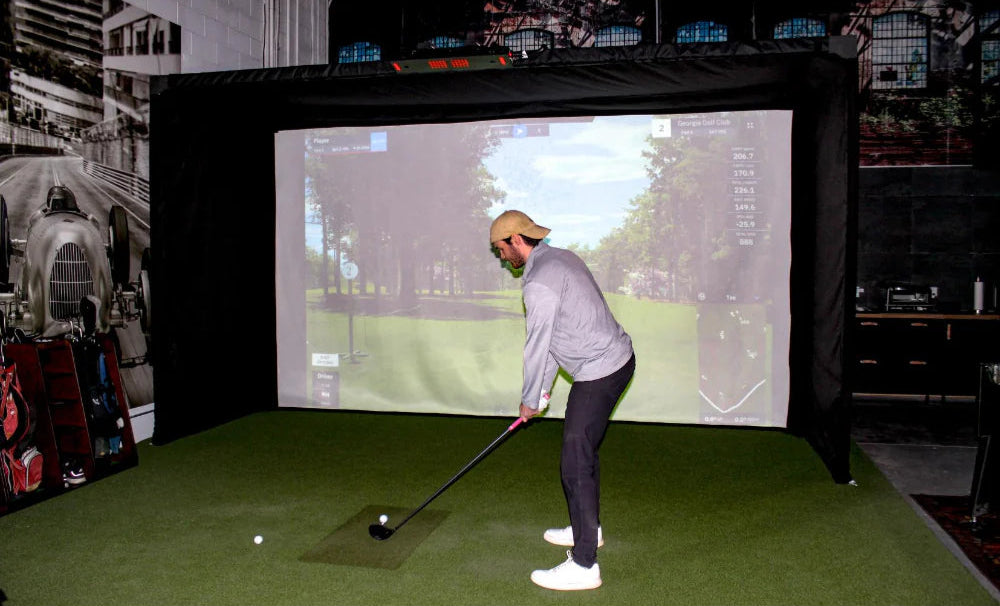
Choosing Compression for Indoor Simulator Practice
Ball compression matters just as much indoors as it does on the course—maybe even more. Simulators don’t hide anything, so the wrong ball can skew your numbers and your confidence.
Swing under ~85 mph? Go low compression. You’ll get a softer feel, easier launch, more consistent distance, and friendlier feedback on minor mishits. Just know it may slightly mask swing flaws.
Swing 100+ mph? Use high compression. Expect a firmer feel, better control, and data that actually translates to the course—but be ready for brutally honest feedback if your strike isn’t clean.
Bottom line: match your ball to your swing speed, even indoors. Test different compressions in your simulator, watch the data, and choose what gives you the most realistic, reliable numbers—so your practice actually pays off when you step outside.
For realistic feedback and data-driven improvement, elevate your indoor golf simulator practice with premium setups from Golf Simulator Depot.
Final Thoughts
The right ball compression can make or break your tee shot—power, control, confidence. Now that you understand low vs. high compression, it’s time to take your swing to the next level. At Golf Simulator Depot, we don’t just sell gear—we build better golfers.
Meet The Compression Ball: a soft memory-foam training aid inspired by Ben Hogan’s legendary mechanics. It helps you sync your arms and body, eliminate swing separation, and develop rock-solid muscle memory. Use it anywhere—at home, on the range, or in your simulator—for fast, lasting results. With an adjustable lanyard and instant feedback, consistency becomes second nature.
Backed by our 45-day Improvement Guarantee and 48-hour fulfillment, there’s zero risk. Pick the right ball compression, grab The Compression Ball, and unlock a more powerful, repeatable swing. Your breakthrough starts now.
FAQs About Golf Ball Compression
What is ball compression in golf?
Golf ball compression measures how much the ball deforms at impact, typically on a 30–120 scale. Lower numbers mean softer balls for slower swing speeds and smoother feel; higher numbers suit faster swings with more control. Choosing the right compression isn’t just technical—it’s key to consistency and power. At Golf Simulator Depot, we remove the guesswork so every swing brings you closer to your best game.
How do low compression balls differ from high compression balls?
Low compression balls (30–70) are softer, launch higher, and add distance for slower swing speeds. High compression balls (80–120) are firmer, fly lower, and give more control for faster swings. It’s not just specs—it’s about matching the ball to your swing style for peak performance. Tools like The Compression Ball help you build consistency so you get the most from your ball choice.
Who should use low compression golf balls?
Low compression golf balls are a fantastic match for beginners, seniors, or players with slower swing speeds (typically under 85 mph with a driver). These balls compress more easily, helping to generate distance and height even without blistering clubhead speed. They also offer a softer feel, which can boost confidence for those still mastering control. If you’re working on your swing mechanics with Golf Simulator Depot’s training aids like The Compression Ball, a low compression ball can complement your practice by forgiving minor inconsistencies as you build muscle memory for a repeatable motion.
Who benefits from high compression golf balls?
High compression golf balls are tailored for advanced players or those with faster swing speeds (above 105 mph with a driver). These balls cater to golfers who can generate significant force, providing lower spin off the tee for maximum distance and better control on approach shots. They’re often preferred by low-handicap players or professionals who prioritize precision over forgiveness. If you’re honing a master-level swing inspired by Ben Hogan’s methodology with Golf Simulator Depot’s innovative tools, a high compression ball could be the perfect partner to showcase your refined mechanics on the course.
Join our mailing list.
Sign up to be the first to know about our can't-miss product drops, special VIP offers & exclusive discounts, and upcoming holiday promotions.
Big Moss Commander Patio Series Putting & Chipping Green
The Commander Patio Series Putting Green: Fun Meets Functionality Ready to elevate your golf game...